//You can set default consent mode right after the UET tag //Once the user provides or denies consent, update the consent setting

Keep Your Business Running With Commercial Septic Tank Pumping in Lewisville, NC

Are your drains slowing down or your septic tank nearing capacity? Schedule commercial septic tank pumping services in Lewisville with Forsyth Septic & Rooter Services before wastewater disrupts your business.

Why Commercial Septic Tank Pumping Matters for Lewisville Businesses

Commercial septic systems in Lewisville often handle far more wastewater than a typical residential system. Restaurants may experience heavier use as they prepare for weekend traffic. Churches can see sudden demand before services, weddings, and major community events. Schools need dependable wastewater systems before students return for the new school year, while apartment communities manage daily use from multiple households. Industrial facilities may also produce consistent wastewater volumes from employees, cleaning processes, and ongoing operations.

Restaurants, schools, offices, retail properties, churches, industrial buildings, and multifamily communities generate wastewater throughout the day. As solids collect inside the septic tank, the system has less space to separate wastewater properly. Grease, paper products, food particles, cleaning residue, and high water use can cause sludge and floating material to build up faster than expected.

Regular service also creates a clearer maintenance history for property managers, business owners, and facility teams. Instead of waiting for wastewater to surface, your organization can use previous service records, occupancy levels, and system conditions to establish a more practical pumping schedule. Contact Forsyth Septic & Rooter Services to arrange commercial septic tank pumping before a manageable maintenance need becomes a costly operational problem.

Commercial Septic Pumping and Maintenance Services

Commercial properties do not all produce the same type or volume of wastewater. A small professional office has different demands than a restaurant, school, event venue, manufacturing facility, or multifamily property. Our technicians evaluate the site, tank access, wastewater volume, business activity, and visible system conditions before recommending the appropriate service.

Complete Commercial Septic Tank Pumping

Commercial septic tank pumping removes the sludge, scum, and wastewater occupying usable tank capacity. Our technicians access the tank carefully, evaluate its condition, and use professional vacuum equipment to remove accumulated material. The goal is to restore working capacity without creating unnecessary disruption around the property.

  • Septic tank access and lid removal
  • Liquid and solid waste removal
  • Sludge and scum evacuation
  • Visual tank condition assessment
  • Secure lid replacement after service

A complete pump out provides more value than removing only the liquid near the top of the tank. Solid material must also be addressed because it continues reducing capacity and can move toward the outlet. We help commercial clients understand what was found and when the system should be checked again.

High Capacity Pumping for Large Commercial Systems

Large buildings and high use properties require equipment capable of handling substantial wastewater volume. Forsyth Septic & Rooter Services operates a commercial fleet equipped to pump up to 13,300 gallons during a single visit, depending on site conditions and system access. This helps reduce delays and repeat trips on larger jobs.

  • Large tank pumping
  • Multiple tank service
  • High volume waste removal
  • Commercial fleet access planning
  • Coordinated service for busy properties

High capacity equipment is especially useful for schools, industrial locations, shopping centers, food service properties, churches, and multifamily communities. A properly planned visit can reduce the amount of time equipment remains on site. Speak with our team about tank size, property access, operating hours, and any known system concerns.

Preventive Septic System Maintenance

Preventive maintenance helps a commercial property move from emergency response to planned system care. We review factors such as tank capacity, customer or employee traffic, water use, previous pumping dates, grease exposure, and seasonal business activity. These details help establish a schedule based on actual system demand.

  • Pumping interval recommendations
  • Maintenance history review
  • Sludge buildup evaluation
  • Access point observations
  • Early problem identification

A fixed schedule should not be based on guesswork alone. Two businesses with similar tank sizes can need very different service intervals because their daily water use and waste loads differ. Our technicians use service findings to help you create a more practical plan and reduce the chance of unexpected septic trouble.

Emergency Septic Pumping and Backup Response

A commercial septic backup requires fast action because wastewater can affect restrooms, kitchens, customer areas, production spaces, and exterior grounds. Forsyth Septic & Rooter Services provides responsive septic and rooter support when slow drainage, rising wastewater, odors, or overflowing fixtures indicate an urgent system problem.

  • Emergency tank pumping
  • Overflow response
  • Wastewater backup evaluation
  • Drain and sewer flow checks
  • Rooter service when needed

Emergency pumping can restore tank capacity, but it is important to determine why the problem developed. A full tank, blocked pipe, root intrusion, damaged component, saturated drain field, or excessive water use can produce similar symptoms. Our team evaluates the situation and explains the next appropriate step instead of treating every backup as the same problem.

Commercial Drain and Rooter Support

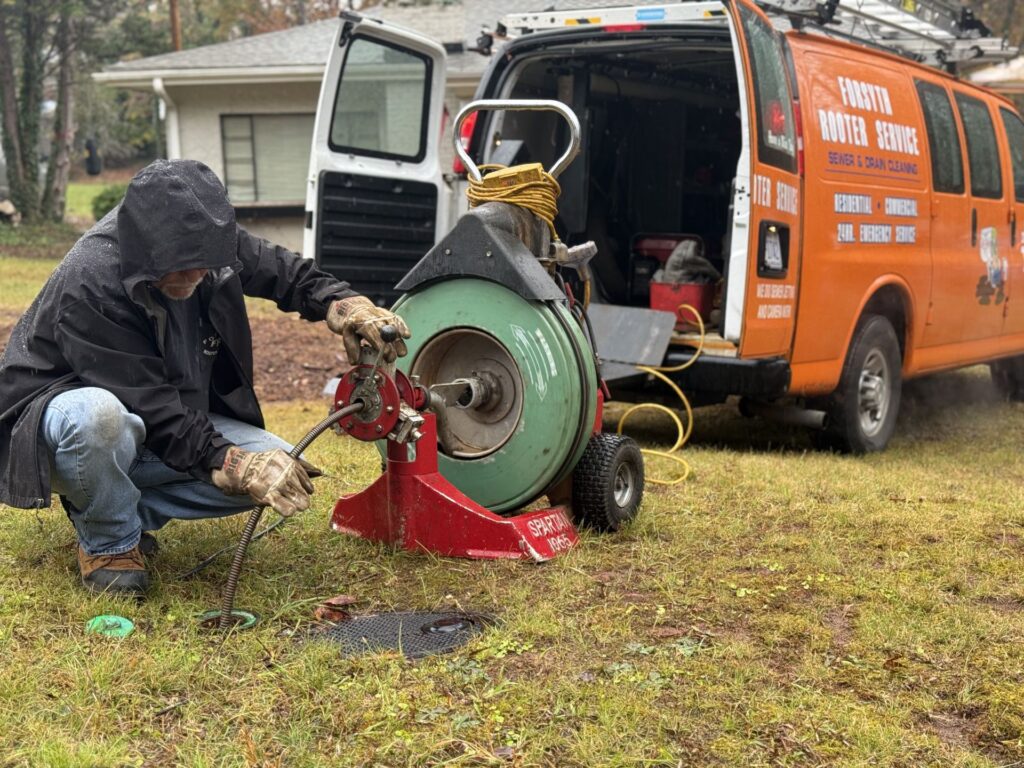
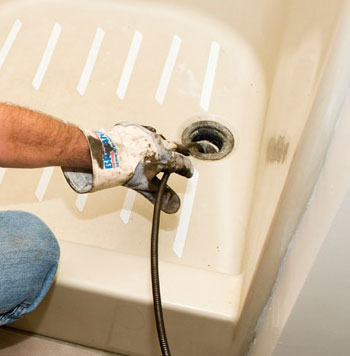
A slow commercial drain does not always mean the septic tank is full. Grease, wipes, paper products, food residue, scale, and root growth can restrict the building sewer or drain lines leading toward the tank. Our rooter services help identify and clear flow problems connected to the septic system.

  • Main drain clearing
  • Sewer line blockage removal
  • Root intrusion clearing
  • Commercial fixture line service
  • Drain flow restoration

Combining septic and rooter knowledge allows us to consider both sides of the problem. Pumping the tank will not correct a blocked building sewer, while clearing a line will not provide lasting relief if the tank has reached capacity. We focus on the actual source of the drainage problem and recommend the service that fits the condition.

How Our Commercial Septic Pumping Process Works

Commercial pumping requires more planning than arriving with a vacuum truck and removing wastewater. Our team first gathers information about the property, known tank location, business type, recent symptoms, access limitations, and previous maintenance. These details help us bring suitable equipment and reduce avoidable delays.

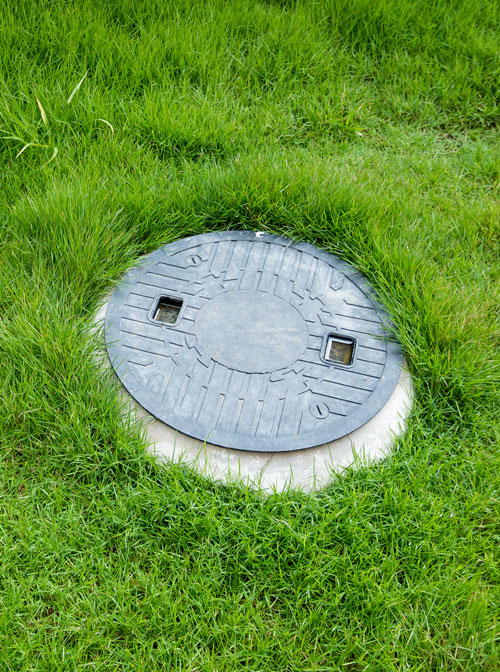
Before pumping begins, the technician confirms the service area and looks for conditions that could affect safe access. Vehicles, loading zones, landscaping, pedestrian routes, locked gates, and underground structures may influence where equipment can be positioned. Once the tank is opened, the technician evaluates visible wastewater levels and material buildup.

Our commercial septic pumping process generally includes:

  1. Initial scheduling and system review: We discuss the property type, symptoms, tank information, access conditions, and preferred service time.
  2. Safe work area preparation: The technician positions the equipment and protects the surrounding service area from unnecessary disturbance.
  3. Tank access: The septic tank lid or access riser is located and opened carefully.
  4. Waste removal: Liquid, sludge, and floating material are removed with professional vacuum equipment.
  5. Visual assessment: Accessible components and conditions are reviewed for obvious damage, unusual water levels, blockages, or maintenance concerns.
  6. Flow related evaluation: When drainage problems remain, the technician determines whether rooter or drain service may also be needed.
  7. Secure closing and cleanup: The tank is closed properly, the immediate work area is cleaned, and service findings are discussed.


After the visit, we help the property owner or facility manager understand what was observed. Keeping the date, tank condition, and recommended next service interval on file makes future maintenance easier to plan and supports better long term decisions.

When Should Forsyth Septic & Rooter Services Pump Your Commercial Tank?

Forsyth Septic & Rooter Services recommends setting a commercial pumping schedule according to the tank’s capacity, daily wastewater flow, business type, occupancy, grease exposure, and previous service findings. A restaurant or event facility may load its system much faster than a small office, even when both properties use similar tank sizes.

Do not rely entirely on a residential three to five year guideline for a commercial property. High traffic restrooms, commercial kitchens, seasonal crowds, employee growth, laundry operations, and extended business hours can increase solids and wastewater volume. The most useful schedule is based on actual accumulation found during pumping.

Watch for these five signs that your Lewisville property needs service:

  1. Multiple sinks, toilets, or floor drains are emptying slowly.
  2. Toilets gurgle or wastewater rises when other fixtures are used.
  3. Sewage or sulfur like odors develop inside or around the property.
  4. Wet, unusually green, or soft ground appears near the tank or drain field.
  5. Wastewater backs up during busy periods or after heavy water use.

Contact Forsyth Septic & Rooter Services as soon as these conditions appear. Waiting for sewage to enter a public, food preparation, employee, or customer area increases cleanup needs and may create a larger interruption. A planned assessment gives your business more control over scheduling, access, and operating continuity.

Where Commercial Septic Pumping Is Used in Lewisville

Commercial septic pumping is needed wherever a business or shared property manages wastewater through an onsite septic system rather than a municipal sewer connection. Lewisville includes developed commercial areas as well as properties located beyond centralized sewer infrastructure. These sites depend on their own tanks, piping, and drain fields to process daily wastewater.

The service approach should reflect how the property operates. A restaurant produces grease and food related waste. A school experiences concentrated restroom use during specific hours. A church or venue may have low weekday flow followed by heavy weekend demand. Warehouses and offices have different employee loads, while multifamily properties handle continuous use from several occupants.

We serve commercial and shared properties such as:

  • Restaurants and food service establishments
  • Retail stores and shopping properties
  • Offices and professional buildings
  • Churches and community facilities
  • Schools, day care facilities, and educational properties
  • Apartment and multifamily communities
  • Mobile home and manufactured housing communities
  • Warehouses and industrial sites
  • Event venues and recreational properties
  • Property management and rental portfolios


Each site needs enough space for service equipment and safe access to the tank. Property managers should keep septic lids, risers, and access routes clear of parked vehicles, storage materials, permanent structures, and heavy landscaping. Good access helps shorten the visit and reduces unnecessary excavation or site disturbance.

Our Other Septic and Rooter Services

Septic Tank Pumping and Maintenance Services

Forsyth Septic & Rooter Services provides routine pumping and septic maintenance for properties throughout Lewisville and nearby communities. We remove accumulated wastewater and solids, review visible tank conditions, and help clients establish realistic maintenance intervals. Regular service supports reliable wastewater flow and reduces the likelihood of backups reaching the building or drain field.

Residential Septic Tank Pumping Service

Homeowners also rely on our residential septic pumping service to protect bathrooms, kitchens, laundry areas, and surrounding property. Our technicians locate and access the tank, remove waste, and explain any visible concerns. Residential schedules are based on tank size, household occupancy, water use, garbage disposal use, and previous sludge accumulation.

Rooter Services

When a drain or sewer line is blocked, our rooter service targets the obstruction restricting wastewater flow. Roots, wipes, grease, paper, scale, and other debris can create problems before wastewater reaches the septic tank. Our team helps determine whether the property needs drain clearing, septic pumping, or both services.

Who Needs Commercial Septic Tank Pumping in Lewisville?

Commercial septic pumping is intended for the people responsible for keeping a property sanitary, accessible, and operational. These decision makers are not simply purchasing waste removal. They are managing restroom availability, public health concerns, tenant expectations, maintenance budgets, vendor access, and the risk of an unexpected closure.

Forsyth Septic & Rooter Services works with clients who need clear scheduling and practical service information. We understand that a property manager may coordinate several locations, while a restaurant owner may need service outside peak dining hours. A facility manager may require access planning around employees, deliveries, students, residents, or production activity.

Our commercial clients include:

  • Business owners responsible for onsite wastewater systems
  • Property managers coordinating maintenance and tenant needs
  • Facility managers overseeing schools, churches, or industrial sites
  • Restaurant operators managing grease and heavy wastewater use
  • Landlords responsible for multifamily or rental properties
  • Community and mobile home park managers
  • Contractors preparing properties for repair or renovation
  • Real estate professionals evaluating onsite system conditions
  • Maintenance teams responding to drainage or odor complaints


Early communication helps us plan around locked access points, restricted parking, security procedures, customer activity, and tank location uncertainty. Tell our team what is happening at the property, when symptoms began, and whether previous pumping records are available. We will use that information to prepare for the service visit.

Why Choose Forsyth Septic & Rooter Services?

Forsyth Septic & Rooter Services brings septic pumping and drain expertise together for commercial properties in Lewisville. That matters because a wastewater problem does not always begin inside the tank. Slow drainage may come from a full septic tank, a restricted sewer line, root intrusion, grease accumulation, or a combination of conditions.

Our commercial fleet is equipped for large volume work, including pumping capacity of up to 13,300 gallons in one visit when property access and system conditions allow. This capacity helps us serve schools, factories, retail properties, restaurants, multifamily communities, and other sites with larger tanks or multiple wastewater structures.

We are fully insured and certified with the State of North Carolina pumper group. Our technicians use professional equipment and handle septage through regulated pumping and disposal practices. We also provide same day and emergency availability for urgent septic and rooter problems.

Commercial clients choose us for responsive scheduling, practical explanations, high capacity equipment, and service that considers the entire wastewater path. Whether your property needs routine maintenance or help with a developing backup, we focus on identifying the immediate concern and helping you reduce the chance of another disruption.

Call Forsyth Septic & Rooter Services to schedule commercial septic tank pumping in Lewisville, request an estimate, or discuss a preventive maintenance plan for your property.

FAQs

How often should a commercial septic tank be pumped?

A commercial septic tank should be pumped according to actual wastewater volume and solids accumulation rather than a universal calendar rule. Restaurants, schools, event venues, multifamily properties, and businesses with high restroom traffic may need service more frequently than low occupancy offices.

The recommended interval depends on tank size, daily users, operating hours, water consumption, grease exposure, garbage disposal use, and the amount of sludge found during previous visits. Seasonal businesses should also account for busy periods rather than calculating usage from an annual average.

After pumping, ask the technician about the sludge and scum levels found inside the tank. That information creates a useful baseline. If the tank was approaching capacity sooner than expected, the next visit should be scheduled earlier. Maintaining records helps your business move from emergency calls to a predictable service schedule.

Commercial septic pumping costs depend on the amount of waste removed, tank capacity, number of tanks, access conditions, pumping time, and any additional work required. A tank with an accessible riser is generally easier to service than one buried under soil, pavement, landscaping, equipment, or an unknown part of the property.

Common cost factors include:

  • Septic tank size and wastewater volume
  • Number of tanks or compartments
  • Distance between the tank and service truck
  • Depth and accessibility of the tank lid
  • Heavy sludge or hardened material
  • Emergency or after hours scheduling
  • Drain cleaning or rooter service
  • Site conditions affecting vehicle placement

Provide as much information as possible when requesting service. Previous pumping records, tank diagrams, access instructions, and known capacity help the company prepare suitable equipment. Forsyth Septic & Rooter Services can review your property details and provide an estimate based on the expected scope.

Yes. A septic tank can be approaching its effective solids limit before wastewater backs up into the building. Septic tanks normally hold liquid, so looking into a tank and seeing a high liquid level does not automatically prove it needs pumping. The more important issue is the depth of accumulated sludge and scum and whether solids are moving toward the outlet.

Early signs may include slower drainage during peak business periods, intermittent odors, gurgling fixtures, or performance changes after heavy water use. These symptoms should be evaluated before they become constant.

Waiting for sewage to appear inside the property is risky. By that stage, wastewater flow may already be severely restricted. Scheduled pumping and accumulation records provide a safer way to manage capacity than using an indoor backup as the reminder.

Forsyth Septic & Rooter Services develops commercial pumping recommendations around actual property use. We consider the business type, tank capacity, number of employees or visitors, restroom volume, operating hours, kitchen activity, previous pumping history, and any seasonal changes in wastewater demand.

During service, our technicians review visible conditions and note the amount of material removed. This information helps determine whether the previous interval was appropriate. A lightly used office may need a different schedule than a restaurant, school, event venue, or multifamily property.

We do not recommend waiting until drains stop working. Call our team to discuss your current pumping interval, known tank information, and recent drainage concerns. We can help arrange an initial service and use the findings to create a more practical maintenance schedule for your Lewisville property.

They are separate wastewater components, but coordinating their maintenance can reduce avoidable drainage problems. Grease traps or interceptors capture fats, oils, grease, and food solids before those materials enter downstream plumbing. The septic tank receives wastewater and separates solids after flow leaves the building.

A neglected grease interceptor can send excess material into the drain system, create odors, restrict flow, and increase the load reaching the septic tank. Pumping the septic tank without addressing a heavily loaded grease system may leave the original source of the problem unresolved.

Restaurant managers should keep separate records for grease service and septic pumping because each component may require a different interval. Service frequency depends on kitchen volume, menu, operating hours, interceptor capacity, and wastewater use. Forsyth Septic & Rooter Services can review symptoms and help identify which part of the system needs attention.

Preparing the site helps the pumping visit move safely and efficiently. Confirm where the septic tank is located and make sure the access route is not blocked by parked vehicles, dumpsters, deliveries, temporary storage, landscaping crews, or construction materials.

Before the appointment:

  • Provide gate, security, or lockbox instructions
  • Reserve space for the service vehicle
  • Mark known tank and access point locations
  • Share previous pumping or inspection records
  • Notify tenants or onsite staff when appropriate
  • Keep people away from the active work area
  • Report recent odors, backups, or wet ground
  • Identify utilities or structures near the tank

Do not open or enter a septic tank yourself. Septic tanks can contain dangerous gases and unstable access components. Leave lid removal and waste handling to trained professionals with appropriate equipment. Clear communication before arrival allows the technician to focus on the system rather than resolving preventable access problems.

No. Pumping restores tank capacity, but it does not repair every condition that produces a backup. Wastewater may also be restricted by a clogged building sewer, grease buildup, root intrusion, damaged piping, a blocked outlet, failed pump equipment, or a saturated drain field.

The location and timing of the symptoms provide useful clues. When one fixture is affected, the problem may be local to that branch drain. When several fixtures slow down or back up together, the main line or septic system deserves closer attention. When wastewater resurfaces outside, the tank, piping, or absorption area may be involved.

Forsyth Septic & Rooter Services provides septic pumping and rooter support, allowing our team to consider both tank capacity and drain flow. Contact us with details about the affected fixtures and recent system behavior so we can prepare for the most likely conditions.

Heavy rain can saturate the soil around a drain field and reduce its ability to accept wastewater. A system already carrying excessive solids or hydraulic load has less room to handle changing ground conditions. Commercial properties may notice slower drainage, odors, wet areas, or backups when rainfall combines with high water use.

During wet conditions, reduce unnecessary water use where practical. Repair leaking toilets or faucets, avoid scheduling unusually heavy water activities at the same time, and keep roof drains and surface runoff directed away from the septic area.

Do not drive or park heavy vehicles over the tank or drain field. Compacted soil and damaged components can create long term problems. Pumping may be part of the response when a tank contains excessive solids, but a saturated drain field requires careful evaluation. Report rainfall related symptoms when scheduling service so the technician understands the context.

Yes. Forsyth Septic & Rooter Services operates commercial pumping equipment capable of removing up to 13,300 gallons during a single visit, depending on access, tank configuration, and site conditions. This capacity supports larger systems serving schools, retail centers, factories, restaurants, multifamily properties, churches, and other high use facilities.

Before scheduling, provide any available information about tank size, number of compartments, access points, pumping history, and the distance between the tank and the nearest suitable truck position. These details help us plan the equipment and time needed for the property.

Large capacity does not replace proper site assessment. Multiple tanks, difficult access, heavy solids, or additional drain problems may affect the service plan. Call Forsyth Septic & Rooter Services to discuss your Lewisville property and arrange commercial pumping around your operating schedule.

Calling before an emergency gives your business control over timing, access, customer communication, and maintenance costs. Once wastewater backs up, the problem can affect restrooms, kitchens, work areas, tenants, employees, customers, and outdoor spaces. Emergency cleanup and operational downtime can cost more than planned pumping.

Forsyth Septic & Rooter Services provides commercial septic pumping, high capacity waste removal, drain cleaning, and rooter support. Our team can evaluate whether the immediate concern involves tank capacity, restricted drainage, or both. We are fully insured, equipped for commercial work, and available for same day and emergency service when urgent conditions arise.

Do not use recurring odors, slow fixtures, or wet ground as reasons to postpone maintenance. Use them as early warnings. Call Forsyth Septic & Rooter Services today to schedule commercial septic tank pumping in Lewisville or request an estimate for your property.
:::

The frequency guidance was intentionally framed around tank capacity, usage, solids accumulation, and inspection findings rather than an unsupported fixed interval. The EPA identifies those as the main pumping factors, while Forsyth County describes pumping as preventive maintenance.