Residential Grease Trap Cleaning for Clemmons Homes
Is trapped grease causing kitchen odors, slow drainage, or recurring sink clogs? Forsyth Septic & Rooter Services provides residential grease trap cleaning in Clemmons for indoor and outdoor systems. Call now to request service.


A Neglected Grease Trap Can Affect More Than the Kitchen Sink
If your kitchen sink is draining more slowly than usual, foul odors keep coming back, or you’ve dealt with the same grease clog more than once, your grease trap may be overdue for cleaning. Many homeowners don’t even realize they have a grease trap until these warning signs appear. Left unaddressed, grease buildup can lead to recurring drain issues, unpleasant odors, and even place additional strain on your home’s plumbing or septic system.
A residential grease trap captures fats, oils, grease, and food particles before they enter the main drain or septic system. The unit slows kitchen wastewater long enough for grease to rise and heavier food solids to settle while cleaner water continues through the system. Over time, however, the trap fills with grease and debris, leaving less room for proper separation. As the trap loses capacity, grease can begin escaping into the connected drain line, where it cools, hardens, and contributes to stubborn clogs. Homes with septic systems face an added concern, as grease entering the septic tank can build up in the scum layer and reduce the system’s overall efficiency. Professional grease trap cleaning removes the accumulated waste, restores the trap’s ability to function properly, and helps protect the rest of your wastewater system before a small maintenance issue turns into a costly repair.
During service, Forsyth Septic & Rooter Services doesn’t simply remove the grease. Our technicians also inspect accessible components such as the inlet, outlet, baffles, and seals for visible issues that could affect performance. If additional drain or septic concerns are identified, we’ll explain what we found and recommend the most appropriate next steps to help keep your system operating reliably.
Residential Grease Trap Services Based on the Condition Found
Not every grease trap problem requires the same response. A unit that is due for routine cleaning may only need waste removal and accessible surface cleaning. An overflowing trap may also have a blocked outlet, damaged component, or restricted kitchen drain.
Complete Grease Trap Pumping and Waste Removal
Complete cleaning starts by removing the material stored inside the trap. This includes the grease floating near the surface, food solids settled at the bottom, and wastewater between those layers.
The technician removes:
- Fats, oils, and grease
- Food particles and settled sludge
- Wastewater held inside the unit
- Material around accessible baffles
- Buildup near the inlet and outlet
- Loose residue beneath the lid
Removing only the visible surface grease leaves heavier waste behind. That remaining material continues using space, producing odors, and shortening the time before the next cleaning.
Once the contents have been removed, the trap regains the open capacity needed to separate new kitchen wastewater. The technician can also see internal conditions more clearly and identify accessible components that appear loose, displaced, or damaged.
Cleaning for Indoor and Outdoor Grease Traps
Residential interceptors differ in size and location. A compact unit may sit beneath the kitchen sink or inside a utility space. A larger trap may be installed outside between the kitchen waste line and the septic or drainage system.
Indoor traps require careful work because spills can affect cabinets, flooring, stored items, and nearby food preparation areas. The homeowner should remove cleaning products, cookware, and personal items from around the unit before service.
Outdoor systems require a clear path to the access lid. Vehicles, lawn equipment, planters, storage containers, and other obstacles should be moved before the appointment. A buried or difficult access point may require additional preparation.
The technician adjusts the service approach according to the unit’s location, capacity, and waste level. The goal is to remove the contents safely while limiting disruption to the surrounding area.
Inlet, Outlet, and Baffle Cleaning
A grease trap depends on more than an empty container. Its inlet, outlet, and internal baffles control how wastewater enters, slows down, separates, and exits.
Grease or food waste around these components may restrict flow even when the center of the trap still appears to have room. A loose or damaged baffle may also allow grease to pass toward the outlet before it separates properly.
Accessible service may include:
- Clearing residue from the inlet area
- Removing buildup around the outlet
- Cleaning accessible baffle surfaces
- Checking that removable parts sit correctly
- Observing seals around the lid
- Looking for visible cracks or deterioration
Cleaning cannot repair a broken component. When damage is visible, the technician can explain why repair or replacement should be considered. Restoring the correct internal arrangement helps the trap perform its intended separation function after service.
Kitchen Drain and Rooter Support
Cleaning the grease trap does not automatically clear grease that has already hardened inside a pipe. If the kitchen sink remains slow after the unit has been emptied, the connected drain may also be restricted.
The location of the restriction matters. Wastewater may have difficulty entering the trap because of an upstream clog. It may enter normally but leave slowly because the outlet line is blocked. Several affected fixtures may point to a deeper wastewater line problem.
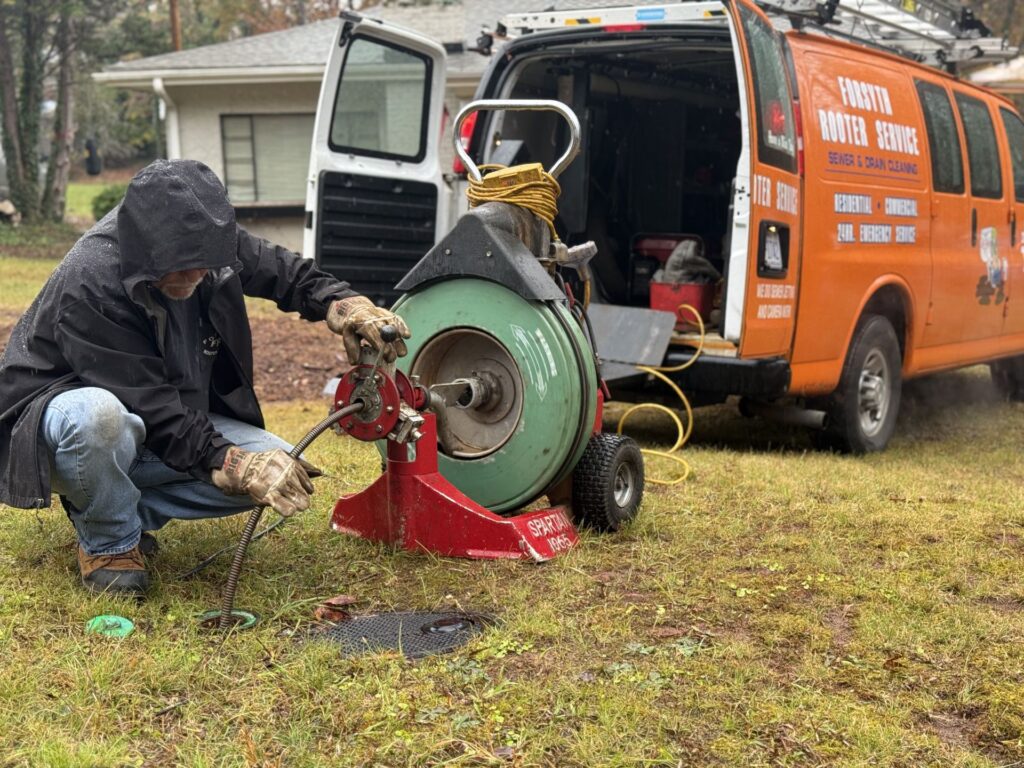
Forsyth Septic & Rooter Services provides rooter service for grease, roots, debris, and other drain obstructions. The company also offers video inspection and hydro jetting for suitable lines. Its published rooter process uses camera inspection to assess pipe condition before high-pressure jetting is performed.
Evaluating both the interceptor and the pipe helps the homeowner avoid paying for a service that addresses only part of the problem.
Maintenance Planning for Frequent Home Cooking
One of the most common things our technicians see is homeowners waiting until the sink backs up before cleaning their grease trap. In reality, scheduling service based on how often your household cooks is one of the best ways to prevent major drainage issues.
Useful scheduling factors include:
- Trap capacity
- Number of household occupants
- Frequency of cooking
- Amount of cooking oil used
- Food scraps entering the sink
- Use of a garbage disposal
- Time since the previous cleaning
- Buildup found during the latest visit
The condition found during cleaning provides the most useful guidance. A nearly full trap after a short period needs a shorter service interval. A lightly loaded unit may not require the same schedule.
Homeowners can slow accumulation by scraping plates into the trash, collecting used cooking oil in a sealed container, and wiping greasy cookware before washing it. These habits support maintenance but do not replace professional cleaning.
What to Expect When Our Grease Trap Team Arrives
Residential service should identify what is happening before waste removal begins. A slow kitchen sink can result from a full interceptor, a blocked inlet, a restricted outlet, or a separate drain problem.
1. Service Request and Symptom Review
Tell the team where the trap is located, when it was last cleaned, and what symptoms you have noticed. Mention any overflow, strong odor, repeated clog, or slow fixture elsewhere in the home.
2. Access Preparation
The technician confirms that the trap can be reached safely. Indoor storage or outdoor obstacles may need to be moved before the lid is opened.
3. Initial Condition Check
The technician observes the waste level, visible grease, settled material, water level, lid condition, and signs of leakage or overflow.
4. Removal of Trapped Contents
Grease, wastewater, sludge, and food waste are removed from the unit. Complete removal restores space for future separation.
5. Cleaning of Accessible Components
Residue is removed from accessible walls, baffles, openings, and removable parts. This step also makes visible damage easier to identify.
6. Drain Flow Review
The technician considers whether wastewater is entering and leaving the trap correctly. Remaining slow flow may indicate that rooter or drain cleaning is needed.
7. Reassembly and Lid Closure
Accessible parts are returned to their intended positions, and the lid is closed securely. Any visible component concern is explained to the homeowner.
8. Maintenance Guidance
The homeowner receives practical information about the buildup found, related drainage concerns, and an appropriate next step.
Do not open a large outdoor interceptor before the technician arrives. Grease traps may contain strong gases, bacteria, slippery waste, and unstable access components.
8 Warning Signs That Your Grease Trap Needs Attention
Residential grease trap problems usually develop gradually. Addressing early symptoms can prevent wastewater from overflowing beneath a cabinet, across a kitchen floor, or around an outdoor access point.
1. The Kitchen Sink Takes Longer to Empty
Slow drainage is a common sign of reduced trap capacity or a grease restriction in the connected line.
2. A Greasy or Sour Odor Returns
Food solids and grease produce strong odors as they decompose. The smell may become more noticeable when warm water enters the trap.
3. The Sink Makes Gurgling Sounds
Gurgling may occur when water and air struggle to move through a restricted inlet, trap, or outlet pipe.
4. Grease Appears Around the Lid
Visible grease near the access point suggests that the unit is overloaded, leaking, or no longer containing waste correctly.
5. Kitchen Clogs Keep Returning
A clog that returns after plunging may be linked to a full trap or hardened grease farther inside the drain.
6. Water Backs Up When the Sink Is Used
An active backup indicates a significant restriction. Stop running water until the system can be checked.
7. Flies or Other Pests Gather Near the Unit
Decomposing food residue can attract insects and other pests, particularly around loose lids or leaking traps.
8. No One Knows the Last Cleaning Date
An unknown maintenance history is common after a move or property transfer. A professional check is safer than assuming the trap is empty.


These symptoms can overlap with ordinary kitchen drain problems. The technician should determine whether the grease trap, connected pipe, or another part of the wastewater system needs service.
Grease Trap Cleaning for Different Residential Situations
Residential grease traps are not installed in every home. They are most useful where kitchen wastewater contains enough grease or food waste to justify a dedicated interceptor.
Homes With Onsite Septic Systems
A grease trap can reduce the amount of kitchen grease entering a septic tank. It does not replace septic pumping, but it helps separate fats, oils, grease, and food residue before they reach the tank.
Properties With Large or Frequently Used Kitchens
Homes used for frequent gatherings, large family meals, or regular high volume cooking may generate more grease than an average household kitchen.
Houses With Existing Outdoor Interceptors
Some homeowners inherit an outdoor grease trap when purchasing a property. The new owner may not know its size, cleaning history, or exact connection to the plumbing system.
Rental Homes With Recurring Kitchen Complaints
Landlords may request service after repeated sink clogs, odor complaints, tenant changes, or an unknown maintenance interval.
Small Multifamily Properties
A shared kitchen line or interceptor serving several units may collect waste faster because several households contribute to the same system.
Homes Preparing for Sale or Occupancy
Cleaning may be appropriate when a vacant property is being prepared for new occupants, particularly when the grease trap has no documented maintenance history. The service should be approved by the homeowner, landlord, property manager, or another person authorized to make decisions for the property.
Practical Grease Trap Care for Clemmons Properties
Forsyth Septic & Rooter Services lists Clemmons among the North Carolina communities it serves. The company also publishes a dedicated residential grease trap cleaning service for the area.
The most useful local preparation is not adding generic city information. It is making sure the technician can identify and reach the equipment.
Before scheduling, determine whether the trap is:
- Under the kitchen sink
- Inside a cabinet or utility space
- Beneath the floor
- Outside near the kitchen wall
- Located between the house and septic tank
- Shared by more than one residential unit
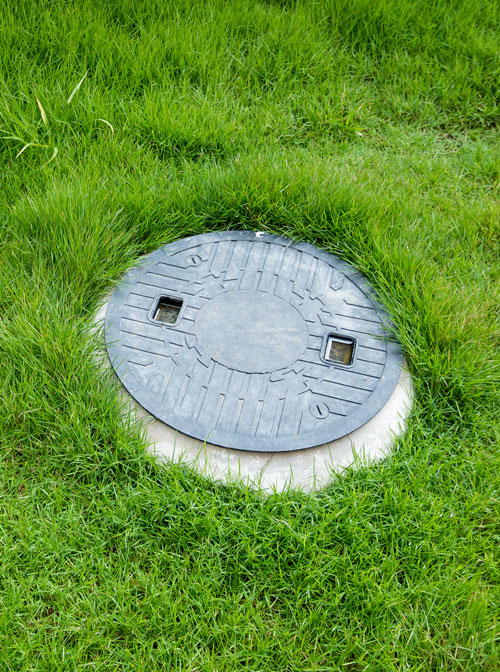
Homeowners who recently purchased a property may find a round or rectangular outdoor lid without knowing what it serves. Do not assume every buried lid is a grease trap. It could provide access to a septic tank, distribution component, cleanout, or another part of the wastewater system.


Photos, installation documents, previous invoices, or a property diagram can help identify the equipment. Tell the service team whether the home uses municipal sewer or an onsite septic system and whether other drains are affected.
Clear the work area before the appointment. Remove items stored beneath an indoor unit. For outdoor traps, move vehicles, tools, planters, lawn equipment, and other obstacles away from the lid.
Related Septic, Grease, and Drain Services
Grease trap cleaning addresses the interceptor itself. Related services may be needed when waste has reached another part of the home’s drainage or septic system.
Residential Septic Tank Pumping
Septic pumping removes accumulated liquid and solids from a household septic tank. Forsyth Septic & Rooter Services provides residential pumping and system maintenance throughout Forsyth County and surrounding areas.
Septic Tank Pumping and Maintenance
Routine maintenance helps homeowners document pumping dates, observe changes in system use, and address accumulated waste before a backup develops.
Residential Rooter Service
Rooter service removes grease, roots, debris, and other material restricting a drain or sewer line. Forsyth provides residential rooter services in Clemmons as part of its local service coverage.
Kitchen Drain Cleaning
Kitchen drain cleaning addresses buildup inside the pipe rather than waste stored inside the interceptor. Some properties need both services.
Video Camera Inspection
A camera inspection can help locate certain internal pipe problems, identify objects or damaged areas, and determine the direction of a buried line.
Hydro Jetting
Hydro jetting uses pressurized water to remove stubborn grease and debris from suitable drain lines. Pipe condition should be checked before this method is selected.
Commercial Grease Trap Cleaning
Commercial service is intended for larger interceptors serving restaurants, food businesses, institutions, and other high use kitchens. Forsyth also provides commercial grease trap cleaning in Clemmons.
Residential Customers We Help
Grease trap service is useful for several types of residential customers, each with different access, maintenance, and approval needs.
Homeowners
Homeowners usually request service because of odors, slow drainage, visible buildup, overflow, or an unknown cleaning history.
New Property Owners
A buyer may inherit a grease trap without instructions or maintenance records. Professional cleaning establishes a new service baseline.
Landlords
Landlords may arrange cleaning between tenants or after repeated kitchen drain complaints. Clear records also help document maintenance at the property.
Property Managers
Property managers need access planning, service information, and practical recommendations for shared or rental systems.
Owners of Small Multifamily Properties
Shared wastewater equipment can accumulate grease faster because several occupants use connected kitchens and drains.
Tenants With Authorization
Tenants may report the first symptoms, but owner or management approval may be required before service is completed.
Home Sellers and Real Estate Representatives
A property representative may request cleaning when preparing a home for inspection, transfer, or occupancy. The service removes waste but should not be presented as a full structural inspection of every system component. When requesting an appointment, explain who owns the property, who will provide access, and who can approve any additional recommendation.
One Team for Grease Traps, Drains, and Septic Systems
Kitchen wastewater does not stop at the grease trap. It passes through the interceptor, continues into the drain line, and may eventually enter a septic tank. A restriction at any point can produce slow drainage, odors, gurgling, or a backup.
Forsyth Septic & Rooter Services works across those connected parts of the wastewater system. Its published services include residential grease trap cleaning, septic tank pumping, rooter service, video inspection, hydro jetting, and emergency drain support.
This broader service capability is valuable when the source of the problem is unclear. Emptying the interceptor will not remove a root from a buried sewer line. Clearing a kitchen pipe will not restore capacity inside a trap packed with grease. Septic pumping will not repair a damaged baffle inside the grease trap.
The technician can review the reported symptoms and recommend the service that fits the condition found. Forsyth also advertises 24 hour emergency response for urgent rooter and drain problems.
Call now to explain the problem, discuss access, and request an estimate for your Clemmons property.
Book Residential Grease Trap Cleaning in Clemmons
Slow kitchen drainage, recurring grease odors, repeated clogs, visible buildup, and an unknown maintenance history should not be ignored. These conditions can indicate that the interceptor has lost capacity or grease has moved into the connected drain.
Forsyth Septic & Rooter Services provides residential grease trap cleaning services in Clemmons for houses, rentals, and small shared residential properties. The service removes accumulated fats, oils, grease, wastewater, and food solids while allowing accessible components to be reviewed.
To request service, provide the property address, trap location, current symptoms, last known cleaning date, and whether the home uses a septic system. Call now or submit a booking request to schedule an appointment.
FAQs
Do most homes have grease traps?
No. Grease traps are standard in commercial food facilities but are not installed in every residence. A home may have one because it uses an onsite septic system, has a high use kitchen, contains an existing outdoor interceptor, or was designed with dedicated grease separation.
A grease trap is different from the curved P trap beneath a sink. The P trap holds water to block sewer gases. A grease trap is a separate container with an inlet and outlet that captures fats, oils, grease, and food solids.
Look for a separate box beneath the sink, an access lid in a utility area, or an outdoor opening connected to the kitchen waste line. Installation documents or previous service invoices may also identify the unit. When uncertain, send the service company a photo rather than opening an unknown buried component yourself.
What happens to grease inside a residential trap?
Grease separates from wastewater because it is generally lighter than water. As kitchen water slows inside the trap, fats and oils rise toward the top while heavier food particles settle near the bottom. Water passes through the space between those layers and exits through the outlet.
The trap does not destroy the grease. It stores it until the unit is cleaned. As the upper and lower waste layers grow, the space available for separation becomes smaller. Grease then has a greater chance of reaching the outlet line.
Temperature also matters. Warm grease may enter as a liquid and then thicken as it cools. This is one reason pouring hot cooking oil into the sink is harmful even when the drain appears to accept it initially.
How frequently should a home grease trap be serviced?
The correct interval depends on the trap’s size and the amount of grease entering it. A compact unit serving a heavily used kitchen may require cleaning much sooner than a larger outdoor interceptor serving a smaller household.
Consider:
- Household size
- Cooking frequency
- Type of food prepared
- Amount of oil used
- Trap capacity
- Food solids entering the sink
- Previous cleaning date
- Accumulation found during service
The most reliable schedule is based on actual buildup. Ask the technician how full the trap was and whether grease had reached the outlet area. Use that information to set the next appointment.
Do not wait for overflow as a maintenance reminder. Odor, slow drainage, gurgling, and repeated clogs suggest the unit may already be overloaded.
What determines the price of residential grease trap cleaning?
Pricing depends on the size, location, condition, and accessibility of the grease trap. A small unit that is easy to reach beneath a sink has a different service scope from a large outdoor interceptor with a buried or obstructed lid.
Other factors include the amount of waste, hardened grease, damaged components, hose distance, and whether the connected drain is blocked. An overflow or emergency request may also require additional work.
Provide photos, approximate dimensions, previous invoices, and a description of the symptoms when requesting an estimate. Tell the company whether the trap is indoors or outdoors and whether the home is connected to a septic system.
A service estimate should reflect the expected work. The technician may recommend a different scope after opening the unit and observing its actual condition.
Can boiling water or drain chemicals clean a grease trap?
No. Boiling water and drain chemicals do not remove the grease, food solids, and sludge stored inside the unit. Hot water may temporarily soften grease, but the material can cool and harden farther along the drain.
Chemical products may also create unsafe conditions for the technician who later opens the trap. Some cleaners can damage seals, pipes, or wastewater treatment processes when used improperly.
A grease trap must be physically emptied. The trapped contents are removed, accessible surfaces are cleaned, and the inlet, outlet, and baffles are checked.
For routine prevention, scrape plates into the trash and wipe greasy cookware before washing it. Store used cooking oil in a sealed container instead of pouring it into the sink, toilet, yard, or septic system.
Should I replace a grease trap that fills too quickly?
Not automatically. Rapid filling may result from heavy kitchen use, a small trap, excessive food solids, incorrect internal components, poor maintenance habits, or a restricted outlet. The cause should be evaluated before replacement is recommended.
Replacement may become practical when:
- The trap is undersized for normal use
- The body is cracked or leaking
- Internal components cannot be repaired
- Corrosion has weakened the unit
- The lid no longer seals securely
- The layout prevents proper wastewater separation
- Repairs would not provide reliable performance
Cleaning establishes the actual condition more clearly. Once the waste is removed, accessible damage and component problems are easier to see.
Ask the technician to explain whether the issue comes from capacity, usage, drainage, or physical damage before deciding on replacement.
How should I prepare for an indoor grease trap appointment?
Clear the area around the unit so the technician can open and service it safely. For an under sink trap, remove cleaning products, cookware, stored food, and personal items from the cabinet.
Before the appointment:
- Stop using the connected sink if it is backing up
- Remove items from the work area
- Keep children and pets away
- Report any chemicals poured into the drain
- Provide the last cleaning date when known
- Explain whether other fixtures are slow
- Make the water shutoff accessible
- Protect nearby food preparation items
Do not open an overflowing trap before the technician arrives. Grease waste contains bacteria and can spill into difficult areas. Tell the service team immediately when wastewater is actively escaping so the appointment can be planned around the condition.
Can Forsyth clear grease that has moved beyond the trap?
Yes. Forsyth Septic & Rooter Services provides rooter service, video inspection, and hydro jetting in addition to grease trap cleaning. These services may be appropriate when grease has hardened inside the connected drain.
The correct approach depends on the pipe’s condition and the location of the restriction. A camera inspection can help identify certain obstructions or damaged areas. High pressure jetting may then be considered for a suitable pipe.
Tell the team whether the sink remains slow, several fixtures are affected, or clogs keep returning after basic drain cleaning. That information helps the technician consider both the trap and the connected line.
Call Forsyth Septic & Rooter Services to discuss the symptoms and request the appropriate residential drain service.
. Can Forsyth clean the grease trap and pump the septic tank during the same service request?
Forsyth Septic & Rooter Services provides both residential grease trap cleaning and septic tank pumping, so homeowners can ask about coordinating the services. Availability and scheduling depend on the equipment, access, and scope required for the property.
The grease trap and septic tank are separate components. Cleaning the trap does not remove sludge from the septic tank, and pumping the septic tank does not empty the grease interceptor.
When requesting an appointment, provide the location and known capacity of both units. Also share the last service date for each system and describe any slow drains, odors, or backups.
Coordinating related maintenance may simplify property access and record keeping. Contact the company to confirm what can be completed during the planned visit.
10. How do I schedule residential grease trap cleaning with Forsyth Septic & Rooter Services?
Call Forsyth Septic & Rooter Services or submit a request through the company website. Provide the Clemmons property address, trap location, current symptoms, and last known cleaning date.
Tell the team whether the unit is beneath the sink, elsewhere inside the home, or outdoors. Mention immediately if grease is overflowing, wastewater is backing up, or several drains are affected. Photos can help identify the equipment and access conditions.
Forsyth provides residential grease trap cleaning, septic pumping, rooter service, camera inspection, and hydro jetting for suitable wastewater problems. The company lists Clemmons within its service coverage.
Contact the team now to request an estimate and schedule the appropriate service for your home.